
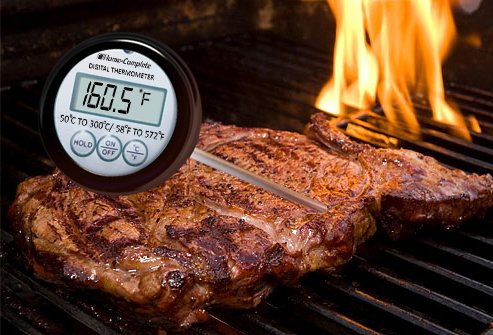
What are the best Meat Probe Thermometers?
There’s nothing like the smell of barbecue on a hot summer Saturday. Good barbecue draws hungry folks out of nowhere, just like ice cream draws kids. As a barbecue aficionado, you know the right equipment is essential to producing perfectly cooked, moist and delicious meat. Most people think the sauce is what makes good barbecue, but those people are wrong; it’s the meat that makes or breaks barbecue. Dry, overcooked meat drowning in sauce is never good barbecue, or, for that matter, good food. Properly barbecued meat doesn’t need a sauce; however a really good sauce will enhance the meat, without hiding faults. The secret to good barbecue is in the cooking of the meat – long and slow, over low heat with plenty of smoke. The best barbecue chefs prepare their meats with wood, or over charcoal with wood chips for smoking. Different meats cook at different times, and the best chefs use meat thermometers to determine if the meat is ready to pull off the fire. So – do you have a meat thermometer, and if you do, is it one that will properly work over a grill?
Meat Thermometers
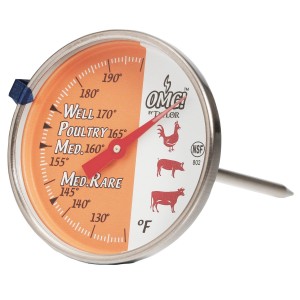 Almost any meat not suited for quick-frying benefits from using a meat thermometer. Steaks or chicken pieces cooked over a grill are pulled either too soon or too late if the chef isn’t using a meat thermometer. Roasts, either pork or beef, also suffer this way.
A meat thermometer tells the chef when the internal temperature reaches the desired degree of doneness, and takes the guesswork out for new cooks. Experienced chefs are good at timing meats, but the thermometer gets it right every time, if used properly.
There are three types of meat thermometers – instant read, leave-in, and surface. The names are self-explanatory: instant read thermometers give a read-out generally in six seconds or less; leave-in thermometers are inserted into the meat before the meat is placed in the oven or on the grill and will sound an alarm when the desired internal temperature is reached; surface thermometers use infrared beams to scan the surface of a pan, a grill, an oven, or a liquid, such as a poaching liquid, and return the temperature.
Instant Read Thermometers
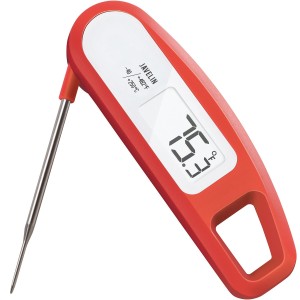 Instant read thermometers utilize a probe, inserted into the meat at the thickest part, to gauge internal temperature. The read-outs are either from a dial or digital led display at the top of the probe, or a digital led display on the body of the thermometer. Most instant read thermometers return a temperature within six seconds of being inserted; a fast read is necessary to reduce heat loss from the pan, oven, or grill. Too much heat loss dries the meat out, making it tough and tasteless. Instant read thermometers can be used for multiple reads on the same piece of meat, but the time the lid is off, the door is open, or the grill top is up can become a problem.
Leave-in Thermometers
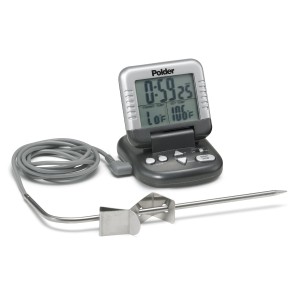
When a chef is preparing a long-cooking piece of meat or poultry, he or she generally uses a leave-in thermometer, set to the desired degree of doneness. The probes are inserted into the thigh of a turkey or other piece of poultry, or into the thickest part of the roast. The thermometer is set to the desired degree and the pan is placed in the oven or on the grill. The door is closed or the top is shut and left that way until the thermometer beeps.
Surface Thermometers
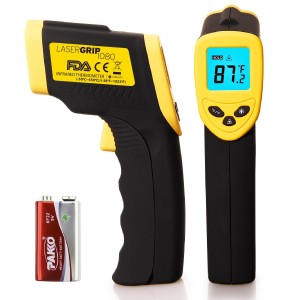 Chefs use surface thermometers to return the surface temperature of a pan before placing the meat to be cooked into it. Surface thermometers also return the temperature of an oven or a grill, or can be used to determine the temperature of a cooking liquid before dropping the food into it. These thermometers use an infrared beam, aimed at the surface being tested, to return the temperature. Cooks without these thermometers use the water-bubble test on pans, trust their oven to be close to the selected temperature, guess when the grill is right, and check how much a liquid is bubbling to determine if it’s ready. A surface thermometer takes the guessing out of cooking.
When Should You Use a Meat Thermometer?
Working with raw meat in this day and age presents challenges, both to the professional chef and the home cook, experience notwithstanding. As late as the 1970s, meat produced in the US was relatively clean. As corporate farming supplanted the individual, conditions changed. Cows were kept penned closely together, making the spread of disease easier. This led to the practice of giving cattle antibiotics, which, coupled with the overuse by humans, gave rise to drug-resistant bugs. E coli H157 was unheard of until the latter part of the 20th century, and poultry became salmonella and listeria infested during this same period. What this means to the professional chef and home cook alike is greater care must be taken when prepping meat or poultry, to prevent cross-contamination, and greater care must be taken when cooking meat or poultry, to ensure any bacteria remaining is killed by the cooking process. Meat thermometers become essential if the meat is prepared any way other than well done.
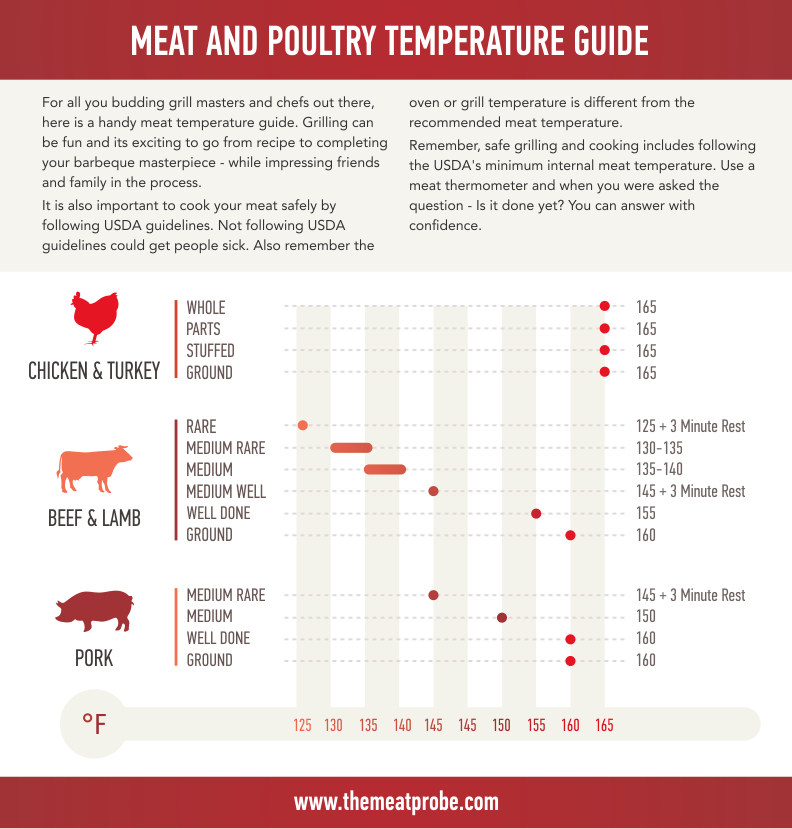
Bacteria grow between 40 and 140 degrees. To ensure any bacteria left on the meat is killed, the meat must be cooked to an internal temperature greater than 140 degrees, and the temperature must be reached in the center of the meat. An instant read thermometer on small cuts, such as steak or hamburger will tell the chef when the meat is safe to eat. A leave-In thermometer in large cuts of meat or whole poultry – turkeys, ducks, and pheasants – will let the chef know when a safe internal temperature is reached. The chef has the discretion to cook the dish to higher temperatures, but it’s critical the dish is hotter than 140.
Proper Use of a Meat Thermometer
There are myriads of thermometers on the market. A chef or cook must decide which thermometer is best for their style of cooking. A home cook who grills and barbecues in the summer may want to invest in both an instant read and a leave-in thermometer; the instant read for steaks, chicken, salmon, or burgers on the grill, and a leave-in for the long, slow smoking of briskets, Boston butts, or ribs. A professional chef should have all three types of meat thermometers, for quick frying, poaching, grilling, roasting, or barbecuing.
A meat thermometer is only as good as the cook using it. A careless cook will either cook meat under-done (and potentially hazardous) or use an instant read too often or too long, resulting in dry, tough and tasteless meat. In the proper hands, a meat thermometer is an asset; in the wrong hands, the thermometer abets the cook as he or she ruins the meat.
Should you use a Meat Thermometer?
A meat thermometer can only enhance the cooking skills of an experienced cook. A meat thermometer can save the new and inexperienced cook from ruining their meat dishes. And, let’s face it – all cuts of meat are costly these days, so if a meat thermometer means the difference between dry, tough and tasteless or moist and delicious, why wouldn’t a cook use one? Meat thermometers range in price from reasonable all the way up to ridiculous, so a cook can find one to fit their needs and their budgets. It’s an investment well worth making.
Which Meat Thermometer is Most Accurate for Cooking
Serving meat at the right temperature can be challenging for inexperienced people who are not used to cooking. If you happen to fall into this category then you already know how frustrating it can be to cook roasts, Thanksgiving turkeys or baked chicken. All of these meats must be cooked for a long period of time and it is almost impossible for a person to figure out if they are done just by looking at them. One way that people can overcome this problem is by using a meat thermometer. A meat thermometer measures the amount of heat that is circulating through a large chunk of meat. There is more than just one kind of this kitchen utensil. The following information will explain which type of meat thermometer is most accurate for taking the temperature of meat.
The Importance of Thermometers
Meat thermometers are important for a couple of reasons. The most important thing they do is to make sure there is enough heat circulating inside of the cooked flesh of an animal. Raw meat contains deadly bacteria. The reason why this bacteria is deadly is simply because it is dead flesh. Meat producers must follow certain standards and protocols to ensure that people are not dying or becoming ill from the meat they sell to the public.
The processes that meat producers are required to use keep animal flesh fresh enough to eat for a limited amount of time. However, if a person does not properly cook a piece of meat, the deadly bacteria that is contained within its flesh could make them ill and in some cases even die. Meat thermometers help to combat this problem because they help people to cook and serve meat at the right temperature that is needed for killing deadly bacteria.
Types of Thermometers
There are two different types of meat thermometers that people can use to check the temperature of the meats that they are cooking. These two thermometers are known as an oven meat thermometer and instant read. Oven meat thermometers are designed to be inserted inside of a meat dish while it is being cooked in the oven. The instant read variety is made to read the temperature of meats after they have come out of the oven. All of the different types thermometers that are available to consumers are made from one of these two types of measuring units.
First, let’s take a look at instant read meat thermometers. These thermometers are designed to be inserted in meat after it has finished cooking. People stick the device into the meat and take its temperature after it has been inserted. The gauge on the thermometer will reveal the temperature that is available inside of the meat.
Many instant read thermometers are digital and are fairly accurate when taking temperature. They are fairly easy to use since a person just has to stick the unit in the fleshy part of the animal while avoiding any bones that might be inside of the flesh.
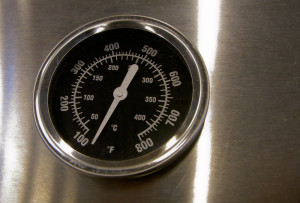 Oven meat thermometers are inserted inside of an animal before it is cooked within the oven. This type of meat thermometer can withstand the high amount of heat that is used to cook most meat. The gauge on the unit uses a needle or a digital reading for taking temperature measurements. Oven meat thermometers are convenient to use because they will allow a person to watch the temperature of meat while it is being prepared.
Another type of instant read, heat-measuring device is known as a thermometer fork. This utensil is a large grilling or cooking fork and it also useful for taking temperature measurements while meat is being prepared. This utensil is especially good for barbecue and for grilling meats.
The dial-instant read unit is designed for foods such as casseroles and soups. This type of thermometer is often used for various meats such as roasts but it was not made for this purpose. You can check the temperature of meat on the spot while you prepare it.
Thermocouple heat measuring devices are fairly accurate and can quickly read the temperature of meat within seconds. This is an instant read device that can help you to accurately serve well-prepared meat based dishes.
Pop up thermometers are oven meat thermometers that does not have a dial or display on them. Instead, the units are inserted into meat and when the temperature inside of the meat is hot enough the thermometer will pop out. Once the unit does pop out people can then eat the meat.
Oven probes are electronic thermometers that are placed into meat before it is put into the oven. These devices are a cross between an oven and instant read thermometer and they are extremely accurate for figuring out how much heat is inside of meat.
Which Meat Thermometer is the Best to Use?
Ultimately, the best meat thermometers would be the thermocouple or oven probes. Both of these units are digital and they can withstand heat very well. They also take very accurate readings when a person has to figure out the temperature of the meat that they are serving. You can quickly and efficiently use both devices to properly cook a wide variety of meats. They fairly inexpensive to purchase and can be used many different times for providing accurate readings.
Best Meat Thermometers?
Some people that cook using BBQs just get on with grilling without considering the need to make sure that meat is cooked thoroughly at the optimum temperatures. These days, hosting a social BBQ is regarded as something that has to be done in certain ways to make sure that all of the meat is cooked properly. The most scientific way to ensure that the grilling has cooked the meat thoroughly is to use a meat thermometer to regularly check the temperature during the cooking process. For people that use gas grills there is a greater element of control in grilling BBQ food and arguably a greater scope for using meat thermometers to test that food is cooked safely. Finding the best meat thermometer for your needs is an important part of cooking your meat perfectly.
These days the vast majority of thermometers used for testing grilled meat are digital, which gives them all the ability to be far more accurate than non-digital ones are. When it comes to grilling meat for BBQs having digital thermometers is a distinct advantage as it is much easier to know when the meat has been cooked properly, and will not cause food poisoning. They effectively take the guesswork of grilling food on charcoal BBQs as well as gas grills. Taking the guess work out of whether or not your grill has cooked all of the meat thoroughly is a good thing as you can relax safe in the knowledge that none of your guests should go down with food poisoning.
As with most items there are a variety of meat thermometers available at different prices, with some having more features than others. The simpler models will be cheaper than the most complex ones, yet they all serve the same basic function of ensuring that the mat is cooked all of the way through.
Here is a selection of some the best performing thermometers for ensuring that meat for BBQs is cooked properly. None of these models are excessively expensive and they will soon pay for themselves as much less meat will be wasted, and the risk of food poisoning will be substantially reduced.
The Universal Gadgets meat thermometer
This is the bestselling digital thermometer on Amazon and will typically cost somewhere around $10. Therefore it can cost less than a decent sized piece of meat. Despite the low cost of these thermometers they are really accurate in measuring the temperature in the different parts of burgers, meat joints, sausages as well as in steaks. This thermometer can be used to make sure homemade jams and wines reach the optimum temperature.
There is a choice between a short probe, which is fine for checking burgers as well as thin sausages, and a longer probably that is ideal for steaks and other thick cuts of meat. For its price it is a really good digital thermometer, a small cost for making sure the meat you serve at BBQs has been cooked for long enough at the optimum temperature.
Kitchen Craft guests meat thermometer
This thermometer has a dial display instead of a LCD display so it may not be as precise as one of those. However it still gives a fairly accurate indication of whether or not the meat you have cooked is safe enough for you and also your guests to eat. The skewer like probe will be long enough to probe any kind o meat you have placed on your grill or BBQ. Due to its design this thermometer can only be used to test the temperature of meat.
Andrew James digital meat thermometer
The Andrew James thermometer is fitted with a fork probe so that it can go further into the pieces of the meat that you are cooking for the BBQ. This thermometer is of greater use for people that tend to cook larger cuts of meat or the finest steaks they can afford. For people that prefer to stick to burgers and sausages this thermometer is probably more complex than what they actually need. It is a good investment for families that eat a lot of meat joints and steaks in their ovens as well as on their BBQs. It is also a piece of equipment that professional cooks and chefs should consider owning.
There are other makes of meat thermometers available that do similarly good jobs of ensuring that food is cooked safely.


